


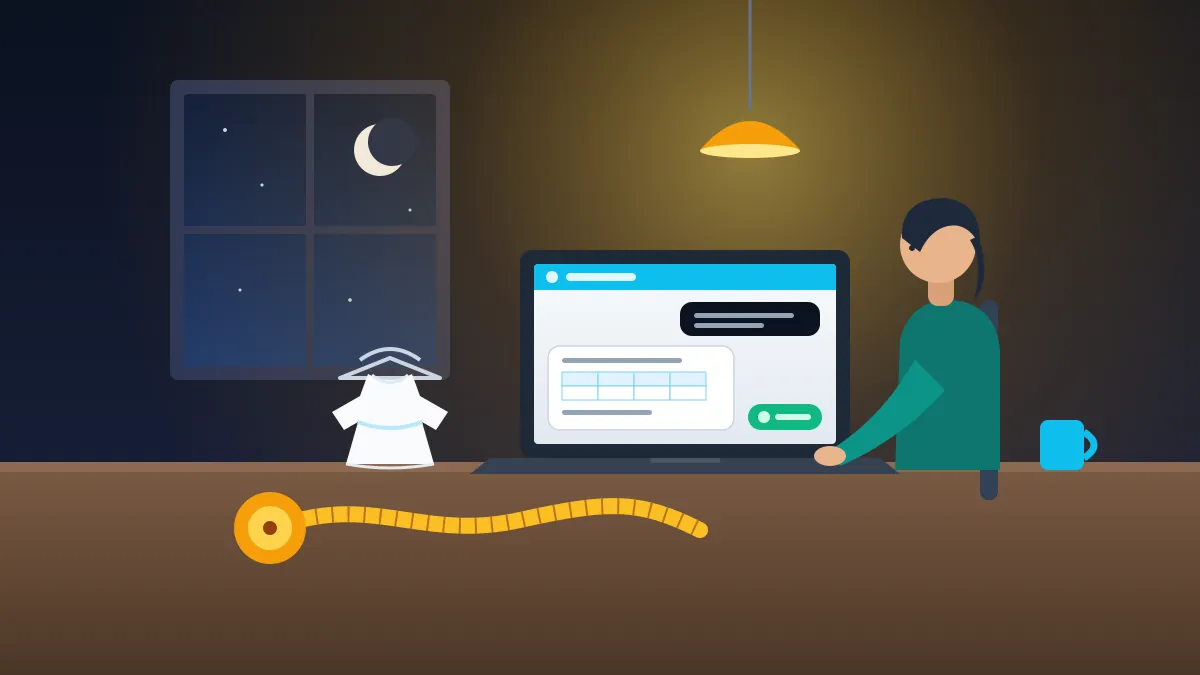
The worst answer to a size question at 9pm might be the one that arrives immediately.
Picture a parent buying a christening outfit. Their child sits between the sizes on your chart. They ask the chat which to choose. It recommends the larger size, confidently, even though the product has no approved between-sizes guidance.
Your store has answered quickly. It has also made something up.
Using AI chat for Shopify size questions works when it helps a shopper interpret information your team has checked. It becomes risky when it turns missing information into a recommendation. The difference starts with what you allow it to know, and what you require it to leave unanswered.
A size chart is not the same as a fit answer
Baymard's 2026 apparel and accessories survey found that size accuracy and fit details were the most sought-after information in customer reviews, at 48%. Shoppers dig through reviews for fit because the chart alone rarely settles the decision.
A chart gives the shopper measurements. They may still need help deciding what those measurements mean for this garment and their preferred fit.
“Is medium right for me?” could mean “Will the chest fit?” It could mean “Will this look oversized?” A parent might really be asking whether an outfit will still fit by the ceremony.
At BooleanBytes, our support work includes about three years with an Australian kidswear brand, and a streetwear brand. The questions in those segments differ: changing sizes and event dates in kids' occasion wear; sizing and exchanges around streetwear drops.
Consider a returning parent who bought from you months ago. The old order establishes what they purchased, not what fits their child now. A useful chat asks for the measurements specified in the current product guide instead of treating the previous size as a recommendation.
For a streetwear shopper, the question may be whether the new tee has the same cut as the last drop. If your records do not establish that comparison, the bot should not infer it from similar product names.
Give the chat a product-specific answer sheet
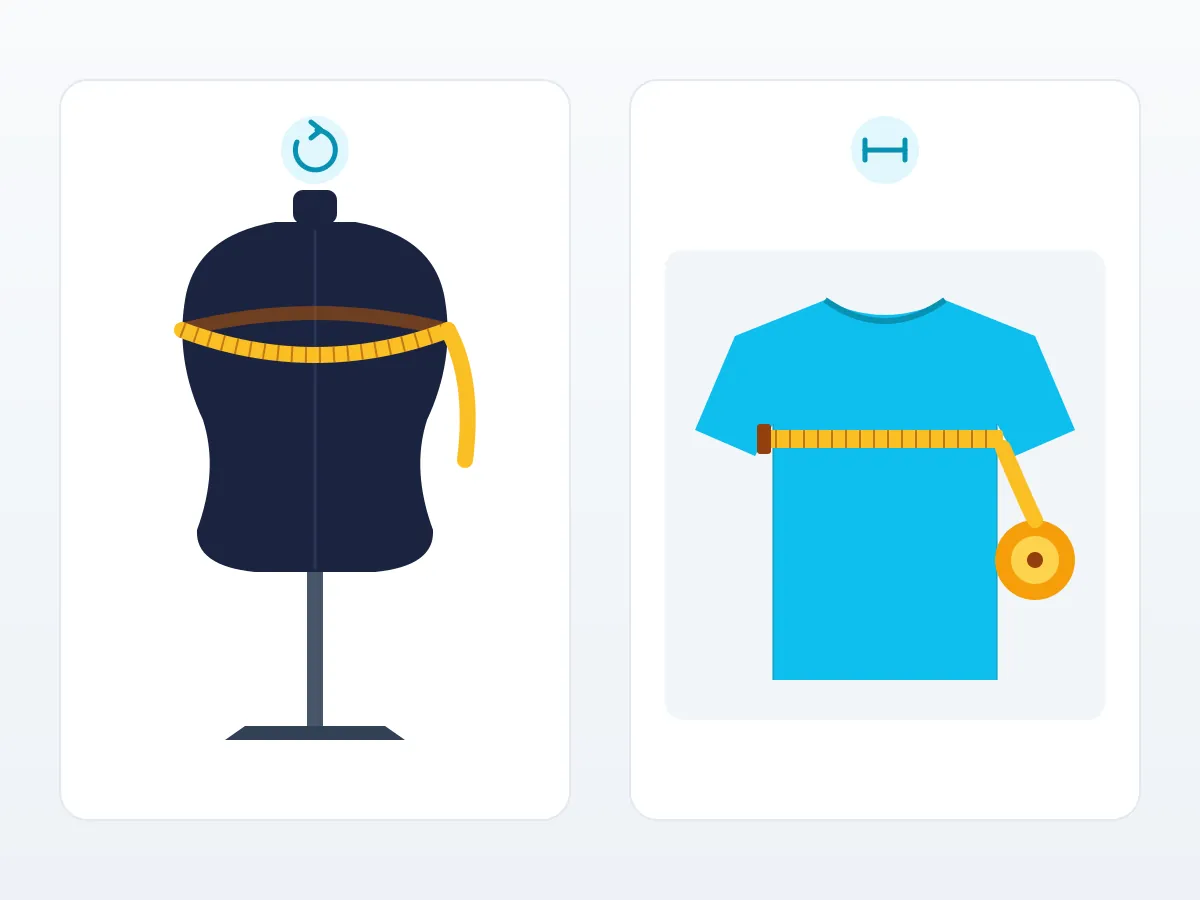
Shopify's sizing guide distinguishes body measurements from garment measurements. Body measurements describe the wearer. Garment measurements describe the finished item. Keep the measurement type attached to every value the chat uses.
A chest measurement taken across a flat tee is not the same thing as a measurement around someone's chest. Your assistant needs the unit and the measuring method alongside the value. A number separated from its column heading is not enough.
Before connecting a chat tool, assemble an approved answer sheet for each product or genuinely shared fit group. Include:
- The relevant size chart, with units and a clear label for body or garment measurements.
- Instructions for taking the measurements the chart requires.
- Approved notes about cut, stretch and between-sizes choices, where those notes exist.
- The return and exchange policy that applies to that item, including sale exclusions.
- The person responsible for checking the information when the product changes.
Keep exceptions attached to the item. A relaxed tee's guidance should not carry over to a fitted jacket because both appear in the same collection.
Then set the answer boundary. The assistant may explain the chart and repeat an approved fit note. It may ask for a missing measurement. It should not invent fabric behaviour, predict a child's growth or guarantee a fit.
For example, a safe response might be: “This chart uses garment measurements. Compare them with an outfit that fits now, measured using the guide. I don't have approved advice for choosing between these sizes. I can pass that question to our team.”
This is the practical problem behind generic AI chatbots on Shopify. A fluent reply can look like a product answer even when it has no product evidence behind it.
At BooleanBytes, the setup we propose combines support agents with AutomatingSales AI as the AI layer. The work begins with checking the store's size chart, fit guide and return policy. Any proposed after-hours setup still needs testing against the actual products and the helpdesk it will use.
Let the conversation stop before it guesses
Say the parent asks: “My child wears the younger size in another brand. Should I buy that here?”
The first reply should establish which outfit they mean. Then it can explain which measurements that outfit's chart requires. Another brand's age label is not a substitute for your own approved sizing guidance.
If the parent provides measurements that clearly match a chart entry, the chat can explain that match. If measurements fall across different entries, it should use your approved rule or ask a person. “Always size up” is not a rule unless your team has made it one for that item.
The return question needs the same care. “Can I exchange it?” should trigger the policy for that product and purchase context. The assistant must not turn a general returns page into a promise that overrides a final-sale exclusion.
On a streetwear drop, separate fit advice from availability. A product page saved during setup does not prove that a particular size remains in stock. If the chat cannot check current variant availability, it should say so and direct the shopper to the current product selection.
Shopify's own documentation separates AI-generated suggested replies, which staff review before sending, from the automatic replies its Inbox agent sends. “Uses AI” tells you little about who checks the answer before a shopper sees it.
A successful test is sometimes a refusal to recommend. If the chart is missing, conflicting or unclear, keep the uncertainty visible rather than choosing the most plausible answer.
Make the next-morning handoff usable
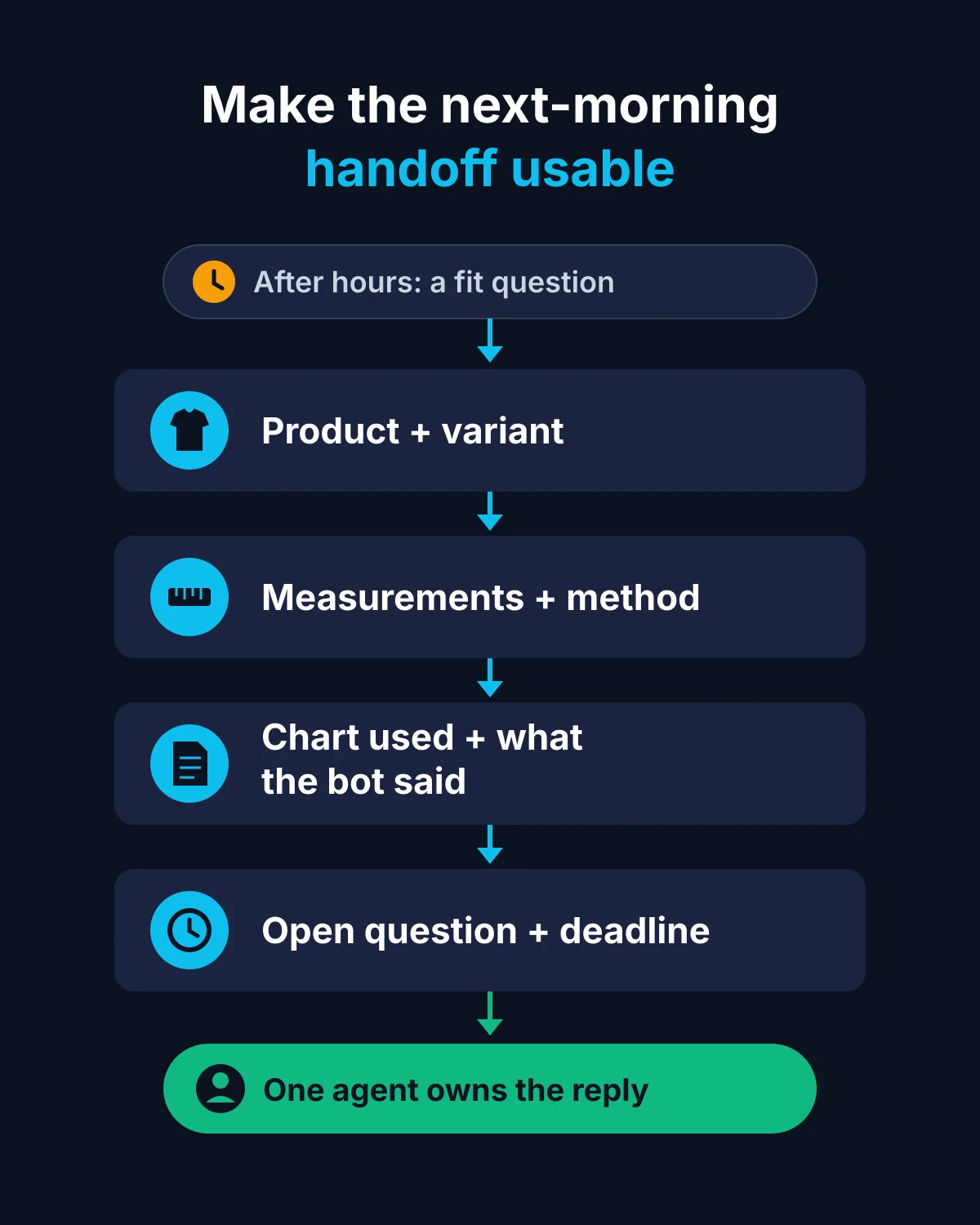
A handoff is not finished when the chat collects an email address. It is finished when someone owns the unanswered question.
For after-hours fit queries, define the next staffed response window and the queue that receives them. Tell the shopper that window in the store's stated time zone. A specific time gives them a reason to wait rather than leave. Do not promise a reply tomorrow if nobody covers the queue then.
With the shopper's agreement, capture only the contact details needed for the follow-up. For a child's outfit, ask for the measurements required by the guide, not a name, birth date or photograph. Give staff a short note that includes:
- The product and variant under discussion.
- The measurements the shopper supplied, with units and method.
- The chart or policy used, and what the assistant already said.
- The unresolved question and any event deadline the shopper volunteered.
Keep the conversation attached. The morning agent should be able to check the product information without asking the parent to repeat the entire exchange.
Test this in your actual helpdesk, whether that is Gorgias, Zendesk or Freshdesk. Confirm that a ticket arrives, reaches the intended queue and retains the conversation. Do not assume an integration does all of that because its description mentions a handoff.
If the shopper needs an answer before staff return, the assistant should explain that limit. It must not guarantee delivery or fit to keep the purchase moving.
Test for a better decision, not a quieter inbox
Start with a limited group of products whose guides your team has checked. Build test questions from your own tickets, removing personal details before using them as examples.
Include incomplete measurements, mixed units, a missing chart and a request for a policy exception. Ask the same question in different words. Check whether the assistant keeps the same boundary when the shopper presses it for a definite answer.
Review the replies alongside the source information. Record wrong measurements, unsupported recommendations and missed handoffs separately from questions the assistant answered correctly. A conversation that stops after bad advice is not a resolved sizing query.
Track purchases and later fit-related returns where your systems allow. Treat any early change as something to investigate, not proof that the chat caused it. Drop schedules, product mix and promotions can change the comparison.
The free AI Support Agent Blueprint turns this into a build sheet, with 30 test questions to run before launch.
Tonight, open a product with an awkward sizing edge case and ask your chat what to buy. Follow the answer back to the chart. If you cannot find the rule it used, remove that recommendation before another shopper relies on it.
AI Conversion Playbook
Find where your store loses buyers, and how AI chat, voice and SMS win them back. 8 chapters plus a 30-day roadmap.
We'll email you the guide plus a few short follow-ups over the next two weeks. Unsubscribe anytime. Privacy policy